
The landscape of digital product marketing has evolved dramatically, requiring businesses to adopt sophisticated strategies that combine technology, personalization, and multichannel engagement. As organizations increasingly rely on digital products-from software solutions to online courses and subscription services-the ability to effectively market these offerings has become a critical competitive advantage. Understanding how to leverage modern tools, automation, and data-driven insights separates successful campaigns from those that fail to generate meaningful results.
Understanding the Digital Product Marketing Ecosystem
Digital product marketing encompasses the strategies and tactics used to promote intangible offerings that exist exclusively in digital form. Unlike physical products, digital offerings present unique challenges and opportunities that require specialized approaches.
The fundamental difference lies in how customers evaluate and experience these products. There's no physical interaction before purchase, making trust-building and clear communication essential. Understanding the basics of digital product marketing requires recognizing that potential customers need comprehensive information, social proof, and seamless experiences to make confident purchasing decisions.
Key Components of Successful Campaigns
Effective digital product marketing relies on several interconnected elements:
- Value proposition clarity: Articulating exactly what problems your product solves
- Target audience precision: Identifying and understanding your ideal customer segments
- Channel optimization: Selecting platforms where your audience actively engages
- Conversion path design: Creating frictionless journeys from awareness to purchase
- Retention mechanisms: Building systems that encourage repeat engagement
The digital marketing suite approach integrates these components into a cohesive strategy that addresses every stage of the customer journey.
Content Marketing as a Foundation
Content serves as the cornerstone of digital product marketing, providing the educational and persuasive materials that guide prospects toward conversion. High-quality content establishes authority, builds trust, and demonstrates expertise in ways that traditional advertising cannot match.
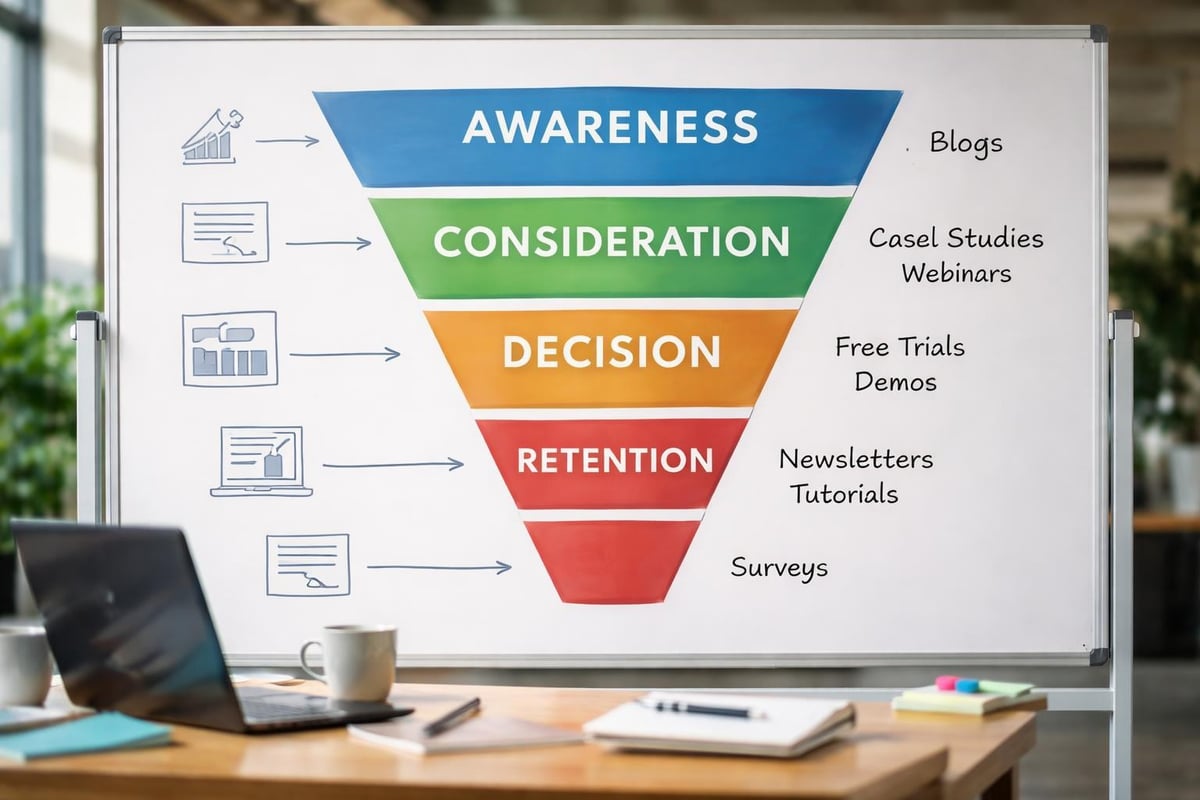
Developing a content strategy requires mapping topics to customer pain points and search intent. Each piece should serve a specific purpose within the buyer journey:
- Awareness stage content: Blog posts, guides, and educational resources that address broad industry challenges
- Consideration stage content: Comparison articles, case studies, and detailed product explanations
- Decision stage content: Demos, free trials, testimonials, and ROI calculators
- Retention stage content: Tutorials, best practices, and advanced use cases
Leveraging Multiple Content Formats
Diversifying content formats maximizes reach and engagement across different audience preferences. Video demonstrations, interactive webinars, podcasts, infographics, and written guides each serve distinct purposes and appeal to different learning styles.
Video content particularly excels at explaining complex digital products. Screen recordings, tutorial series, and customer testimonial videos build confidence and reduce perceived purchase risk. Meanwhile, written content like comprehensive guides and blog resources provides searchable, detailed information that supports organic discovery.
Email Marketing for Digital Product Success
Email campaigns remain one of the highest-ROI channels for digital product marketing, offering direct access to interested prospects and existing customers. The key lies in segmentation, personalization, and strategic automation.
| Email Type | Purpose | Typical Timing | Key Metrics |
|---|---|---|---|
| Welcome Series | Onboard new subscribers | Immediate | Open rate, click rate |
| Educational Drip | Nurture prospects | Weekly | Engagement, conversion |
| Product Updates | Announce features | As released | Click-through, adoption |
| Re-engagement | Win back inactive users | 30-60 days inactive | Reactivation rate |
| Promotional | Drive conversions | Strategic intervals | Revenue, ROI |
Segmentation transforms generic email blasts into targeted communications that resonate with specific audience groups. Dividing your list based on behavior, demographics, purchase history, or engagement levels enables personalized messaging that addresses unique needs and interests.
The email marketing category explores advanced techniques for maximizing campaign performance through data-driven personalization and automation.
Social Media Strategy for Digital Products
Social platforms provide powerful channels for building communities, demonstrating value, and driving conversions. However, effective social media marketing for digital products requires moving beyond basic promotional posts.
Community building creates networks of engaged users who become advocates for your product. Dedicated groups, hashtag campaigns, and user-generated content initiatives transform customers into active participants in your brand story.
Platform Selection and Optimization
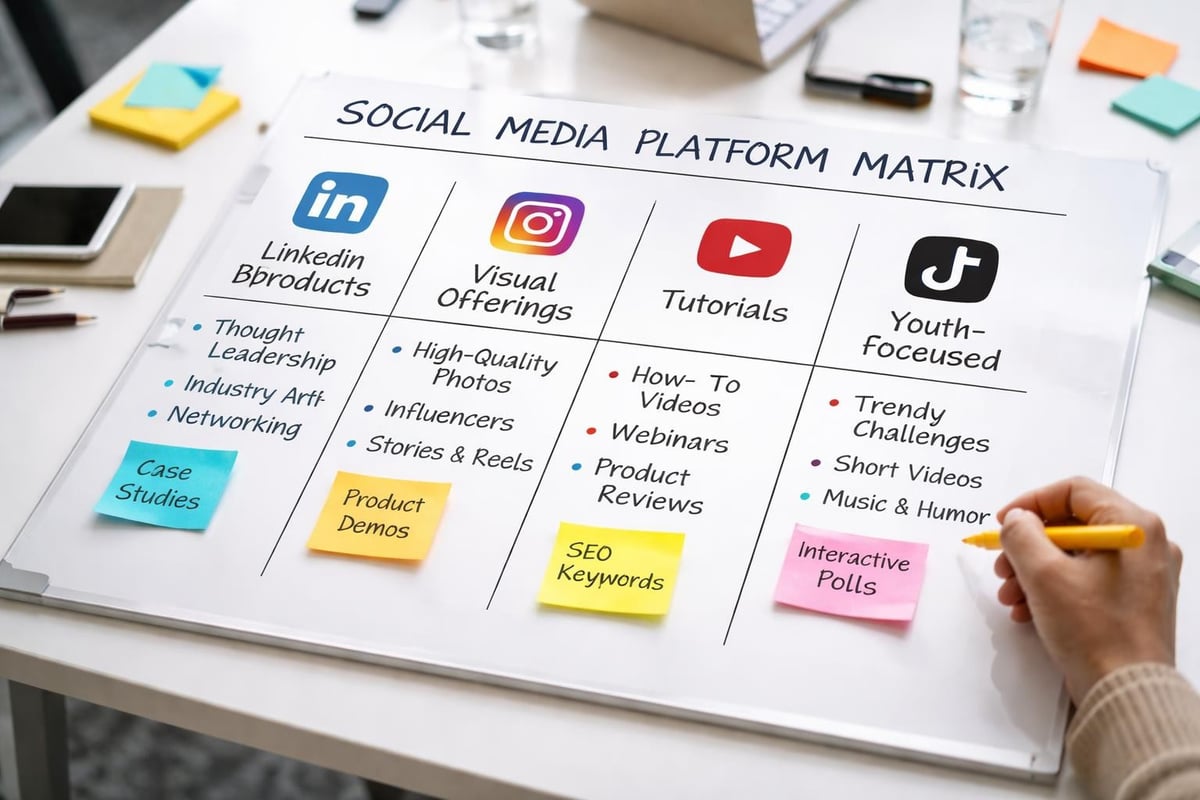
Not all social platforms deliver equal results for digital product marketing. Strategic selection depends on where your target audience actively engages and which platforms support your content format needs.
- LinkedIn: Ideal for B2B software, professional tools, and business education products
- Instagram: Visual products, creative tools, and lifestyle-oriented digital offerings
- Twitter/X: Real-time engagement, customer support, and industry thought leadership
- YouTube: Tutorial content, product demonstrations, and educational series
- TikTok: Reaching younger audiences with creative, short-form product showcases
Successful digital marketing best practices emphasize maintaining consistent omnichannel presence while adapting messaging to each platform's unique culture and format requirements.
AI Automation and Intelligent Personalization
Artificial intelligence has revolutionized digital product marketing by enabling hyper-personalization at scale and automating complex workflows that previously required extensive manual effort. AI automation solutions now power everything from customer segmentation to content optimization and predictive analytics.
Machine learning algorithms analyze customer behavior patterns to predict purchase intent, identify churn risks, and recommend optimal engagement strategies. This intelligence enables marketers to intervene at precisely the right moments with perfectly tailored messages.
Practical AI Applications
- Dynamic email personalization: Subject lines, send times, and content adapted to individual preferences
- Chatbot qualification: Automated conversations that guide prospects while gathering valuable data
- Predictive lead scoring: Identifying high-value prospects based on behavioral signals
- Content recommendations: Suggesting relevant resources based on browsing history and interests
- Automated A/B testing: Continuously optimizing campaigns through machine learning insights
Marketing automation and AI strategies enable smaller teams to execute sophisticated campaigns previously requiring large departments, democratizing advanced marketing capabilities.
Social Proof and Trust Building
Digital products face inherent trust challenges since customers cannot physically examine them before purchase. Strategic use of social proof overcomes skepticism and validates quality claims through third-party endorsement.
Customer testimonials, case studies, user reviews, and ratings provide essential credibility. However, authenticity matters more than volume. Detailed stories showcasing specific results and transformations resonate more powerfully than generic praise.
| Social Proof Type | Trust Impact | Implementation Difficulty | Best Use Cases |
|---|---|---|---|
| Video Testimonials | Very High | Medium | High-ticket products |
| Written Reviews | High | Low | Volume-based validation |
| Case Studies | Very High | High | B2B, complex solutions |
| User Statistics | Medium | Low | Establishing popularity |
| Expert Endorsements | High | Medium | Authority positioning |
| Media Mentions | High | Variable | Brand credibility |
Third-party validation through industry awards, certification badges, and security seals provides additional credibility markers that reduce purchase anxiety. Displaying these prominently near conversion points increases completion rates.
Conversion Optimization Strategies
Converting interested prospects into paying customers requires eliminating friction while providing compelling reasons to act immediately. Every element of the conversion path deserves strategic attention and continuous optimization.
Landing page design significantly impacts conversion performance. Clear headlines, benefit-focused copy, compelling visuals, and prominent calls-to-action create pages that convert. A/B testing identifies which combinations resonate most effectively with your specific audience.
Reducing Purchase Friction
Simplifying the purchase process removes barriers that cause abandonment:
- Minimal form fields: Request only essential information
- Multiple payment options: Support various payment methods and processors
- Guest checkout availability: Don't force account creation before purchase
- Transparent pricing: Eliminate surprises in the checkout process
- Clear refund policies: Reduce perceived risk through money-back guarantees
Free trials and freemium models particularly excel at converting digital product prospects. Allowing hands-on experience before financial commitment builds confidence and demonstrates value in ways that marketing copy alone cannot achieve.

Retention and Lifecycle Marketing
Acquiring customers represents just the beginning of the digital product marketing journey. Retention marketing focuses on maximizing lifetime value through continued engagement, upsells, and advocacy development.
Onboarding sequences dramatically impact long-term retention. The first hours and days after purchase determine whether customers successfully adopt your product or abandon it. Structured onboarding emails, in-app tutorials, and proactive support help users achieve early wins that build commitment.
Building Long-Term Value
Successful retention strategies include:
- Regular feature education: Helping customers discover and utilize additional capabilities
- Usage milestone celebrations: Recognizing achievements to reinforce value received
- Exclusive community access: Creating insider experiences that strengthen brand connection
- Upgrade path clarity: Presenting logical progressions to premium tiers or additional products
- Feedback integration: Demonstrating that customer input shapes product development
The services portfolio approach recognizes that digital product marketing extends far beyond initial acquisition into comprehensive lifecycle management.
Measuring Marketing Performance
Data-driven decision making separates effective digital product marketing from guesswork. Establishing clear metrics and regularly analyzing performance enables continuous improvement and resource optimization.
Key performance indicators vary by marketing objective but typically include:
- Acquisition metrics: Traffic sources, conversion rates, cost per acquisition
- Engagement metrics: Email open rates, click-through rates, content consumption
- Retention metrics: Churn rate, customer lifetime value, repeat purchase rate
- Revenue metrics: Monthly recurring revenue, average order value, revenue per user
- Advocacy metrics: Net promoter score, referral rates, social sharing
Successful digital marketing case studies demonstrate how brands leverage analytics to identify opportunities, optimize campaigns, and achieve measurable business outcomes.
Emerging Trends Shaping 2026
The digital product marketing landscape continues evolving rapidly, with several trends gaining prominence this year. Voice search optimization increasingly matters as smart speakers and voice assistants become primary interfaces for information discovery.
Interactive content formats-quizzes, calculators, assessments, and configurators-generate higher engagement and provide valuable customer data. These experiences educate prospects while simultaneously gathering insights that inform personalization and segmentation strategies.
Privacy-first marketing responds to increasing consumer concern about data usage and tightening regulations. Transparent data practices, consent-based marketing, and first-party data strategies replace outdated tracking methods while maintaining campaign effectiveness.
Community-led growth recognizes that passionate user communities drive more sustainable growth than paid advertising alone. Investing in forums, user groups, and peer-to-peer support creates self-sustaining ecosystems that reduce marketing costs while increasing customer satisfaction.
Integration and Orchestration
Modern digital product marketing demands integration across channels, tools, and teams. Siloed campaigns create disjointed customer experiences that undermine trust and reduce effectiveness. Orchestrated approaches ensure consistent messaging and seamless transitions between touchpoints.
Marketing technology stacks should connect email platforms, CRM systems, analytics tools, and automation software into unified ecosystems. This integration enables comprehensive customer views, triggered workflows based on cross-channel behavior, and attribution modeling that reveals true campaign performance.
The proven digital product marketing strategies that deliver results in 2026 recognize that customers interact with brands across multiple channels simultaneously. Meeting them wherever they are with consistent, personalized experiences drives superior outcomes.
Mastering digital product marketing requires combining strategic thinking with tactical execution across content, email, social media, automation, and analytics. The approaches outlined here provide a foundation for building campaigns that attract qualified prospects, convert them into customers, and retain them for long-term value. Synergy Digital Solutions helps businesses navigate this complex landscape through targeted email and SMS campaigns, engaging social media strategies, and cutting-edge AI automations designed to drive growth and boost engagement.