
The digital marketing landscape in 2026 demands a sophisticated approach to customer engagement. Businesses can no longer treat emails and social media as separate entities operating in isolation. Instead, these two powerful channels must work together seamlessly, creating a unified strategy that amplifies your message, strengthens brand consistency, and drives measurable results. Understanding how to leverage the unique strengths of each platform while maintaining cohesive messaging across all touchpoints has become essential for businesses seeking to maximize their digital presence and customer relationships.
The Evolution of Emails and Social Media as Integrated Channels
The relationship between emails and social media has transformed dramatically over the past decade. Initially viewed as competing channels, they now represent complementary components of a comprehensive digital strategy. Email continues to deliver exceptional ROI, with personalized campaigns generating significant conversion rates. Meanwhile, social media provides real-time engagement opportunities and brand visibility that email cannot match.
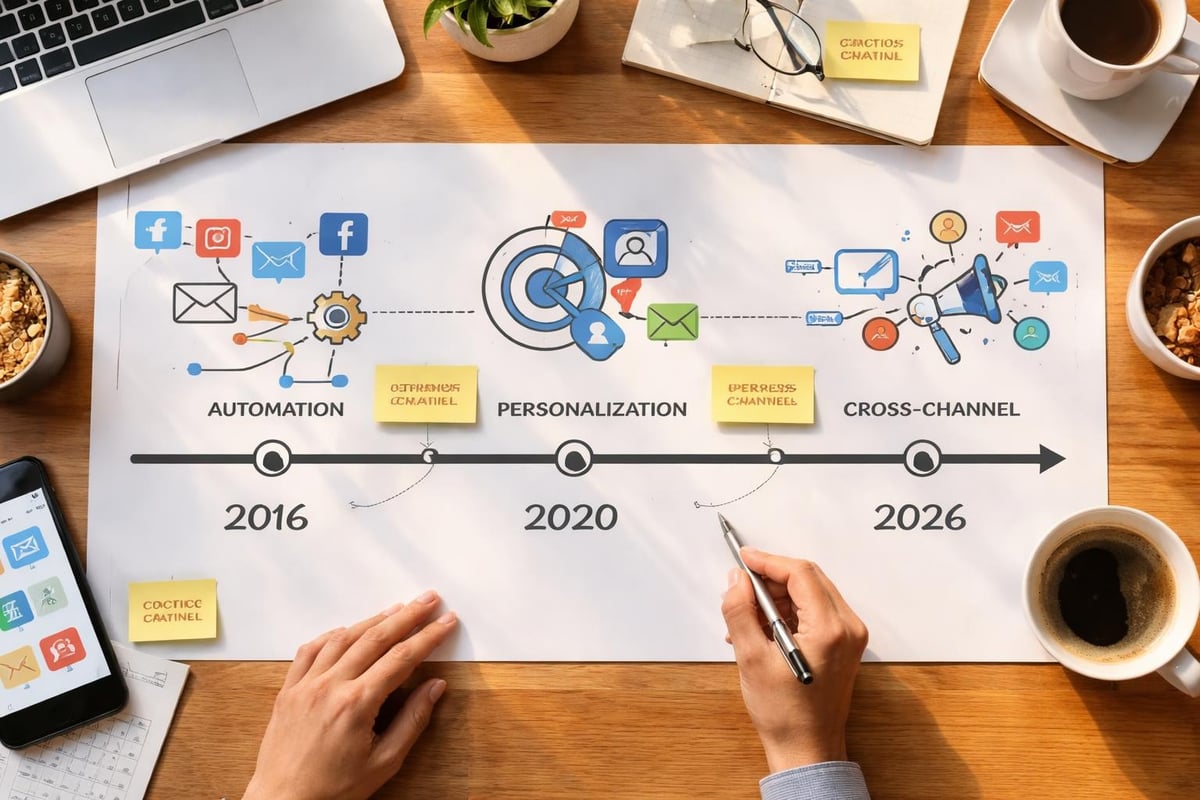
Modern consumers expect brands to meet them where they are, whether that's in their inbox or scrolling through their preferred social platform. This expectation has driven businesses to create synchronized campaigns that reinforce messaging across multiple touchpoints. According to recent research on email automation, the majority of emails now leverage automated systems, enabling more strategic integration with social media efforts.
Cross-Channel Data Synchronization
Successful integration of emails and social media begins with unified data management. Customer interactions across both channels should feed into a centralized system that tracks engagement patterns, preferences, and behaviors. This approach enables you to:
- Identify high-value segments based on combined email and social activity
- Trigger automated workflows when specific cross-channel behaviors occur
- Personalize content using insights from both communication streams
- Optimize send times based on when users engage across platforms
- Measure true customer lifetime value across all digital touchpoints
The AI automation solutions available today make this synchronization more accessible than ever. Advanced platforms can automatically segment audiences, personalize content, and orchestrate campaigns that flow seamlessly between email inboxes and social feeds.
Strategic Content Planning for Emails and Social Media
Content strategy forms the foundation of effective emails and social media integration. Your messaging should maintain brand consistency while adapting to the unique characteristics of each platform. Email allows for longer-form content and detailed storytelling, while social media excels at brief, engaging snippets that encourage immediate interaction.
Content Repurposing Techniques
Smart marketers extract maximum value from every piece of content by strategically repurposing it across channels. A comprehensive blog post can become multiple email newsletters, dozens of social posts, and several video snippets. This approach ensures consistent messaging while respecting the different consumption patterns on each platform.
| Content Type | Email Application | Social Media Application |
|---|---|---|
| Case Studies | Full narrative with data visualization | Key statistics with compelling visuals |
| Product Launches | Detailed feature breakdowns and pricing | Teaser videos and countdown posts |
| Educational Content | Step-by-step guides and tutorials | Quick tips and infographic highlights |
| Customer Stories | Complete testimonials with context | Quote graphics and short video clips |
Following established social media best practices ensures your repurposed content resonates with platform-specific audiences. Each adaptation should maintain core messaging while optimizing format, length, and call-to-action for maximum effectiveness.
Narrative Consistency Across Platforms
Research demonstrates that personal stories in emails significantly increase engagement, particularly when building relationships with decision-makers. This principle extends to social media, where authentic storytelling creates emotional connections with audiences.
Your integrated strategy should weave consistent narratives across both channels. An email campaign launching a new service might include customer success stories, while social media posts share behind-the-scenes content about the service development. Together, these elements create a comprehensive narrative that reinforces your brand message from multiple angles.
Audience Segmentation for Emails and Social Media
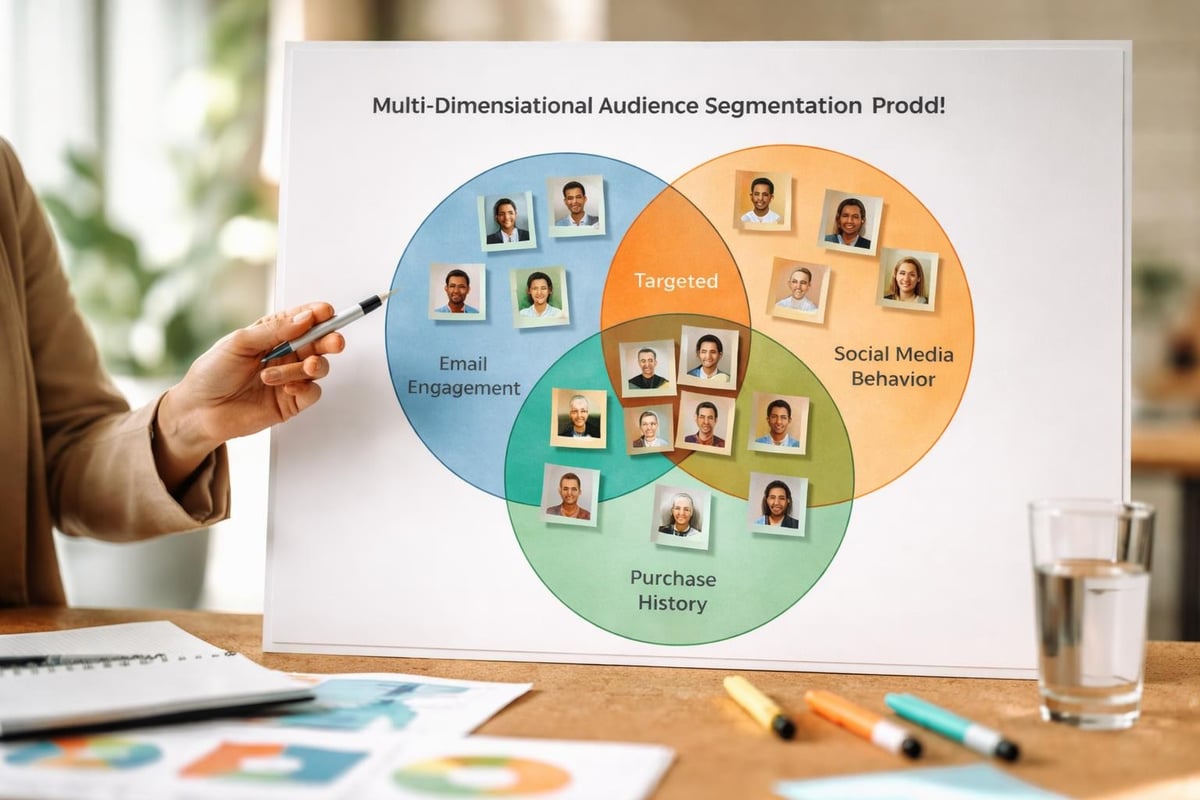
Effective audience segmentation leverages data from both emails and social media to create detailed customer profiles. This sophisticated approach moves beyond basic demographics to incorporate behavioral signals, engagement patterns, and content preferences across all channels.
Behavioral Trigger Integration
Modern marketing automation enables real-time responses to customer behaviors across emails and social media. When a user engages with specific social content, automated email sequences can deliver related information. Conversely, email clicks can trigger social retargeting campaigns that reinforce the message.
Key behavioral triggers include:
- Social engagement followed by email nurture – Users who interact with product posts receive educational email sequences
- Email opens triggering social ads – Recipients who open promotional emails see complementary social advertisements
- Abandoned cart recovery – Coordinated email and social reminders encourage purchase completion
- Post-purchase engagement – Thank-you emails combined with social community invitations build loyalty
- Re-engagement campaigns – Dormant subscribers receive coordinated email and social touchpoints
These automated workflows, particularly when enhanced through AI-powered solutions, create seamless customer experiences that feel personalized and relevant rather than overtly promotional.
Platform-Specific Customization
While maintaining message consistency, successful integration of emails and social media requires platform-specific optimization. Email allows for detailed personalization using merge tags, dynamic content blocks, and individualized recommendations. Social media demands visual impact, concise copy, and interactive elements that encourage sharing and commenting.
Consider how the same promotional campaign might adapt across channels. Your email might feature a 300-word article with multiple product images and a detailed call-to-action button. The social version becomes a striking visual with 50 words of compelling copy and a short-form video demonstrating key benefits. Both serve the same strategic goal while respecting platform conventions and user expectations.
Measurement and Optimization for Emails and Social Media
Comprehensive analytics drive continuous improvement in integrated campaigns. Tracking performance across emails and social media reveals which combinations generate the strongest results and where adjustments can enhance effectiveness.
Essential Cross-Channel Metrics
| Metric Category | Email Indicators | Social Media Indicators | Combined Insights |
|---|---|---|---|
| Engagement | Open rate, click-through rate, time spent reading | Likes, shares, comments, saves | Total brand interaction score |
| Conversion | Purchase rate, form submissions, downloads | Link clicks, profile visits, direct messages | Multi-touch attribution analysis |
| Audience Growth | List growth rate, subscriber retention | Follower increase, audience demographics | Overall reach expansion |
| Content Performance | Most-clicked topics, preferred formats | Top-performing post types, engagement patterns | Content strategy effectiveness |
Following comprehensive email best practices helps establish strong baselines for email performance. When combined with platform-specific social media strategies, you create a robust measurement framework that identifies successful tactics and areas requiring refinement.
Attribution Modeling
Understanding how emails and social media contribute to conversions requires sophisticated attribution modeling. Customers rarely convert after a single touchpoint. Instead, they typically interact with your brand multiple times across various channels before making a purchase decision.
Multi-touch attribution reveals:
- Which channel initiates most customer journeys
- How emails and social media work together to move prospects through the funnel
- The optimal number and sequence of touchpoints for conversion
- Whether certain combinations produce disproportionately strong results
- Where customers drop off and which channel can most effectively re-engage them
Advanced analytics platforms track these journeys automatically, providing insights that inform strategy adjustments. When you discover that social media awareness campaigns followed by targeted email sequences produce your highest conversion rates, you can allocate resources accordingly and refine your approach for maximum impact.
Compliance and Best Practices for Emails and Social Media
Managing emails and social media requires strict adherence to privacy regulations and platform policies. The regulatory landscape continues evolving, with increasing emphasis on data protection, consent management, and transparent communication practices.
Privacy and Permission Management
Email marketing operates under clear regulations requiring explicit consent before sending commercial messages. Social media advertising follows different rules but still demands respect for user privacy and preferences. Your integrated strategy must maintain compliance across both channels while delivering seamless customer experiences.
Compliance priorities include:
- Maintaining separate permission records for email and social media communications
- Providing clear opt-out mechanisms for each channel
- Honoring unsubscribe requests promptly and completely
- Protecting customer data with appropriate security measures
- Transparently disclosing how you collect and use information
The best practices for email marketing emphasize these compliance requirements while offering practical guidance for maintaining list health and subscriber satisfaction. Similarly, understanding social media privacy considerations helps you navigate platform-specific requirements and protect both your business and your audience.
Content Quality Standards
Both emails and social media demand high-quality content that provides genuine value to recipients. Generic, overly promotional messaging performs poorly across all channels and can damage your brand reputation. Instead, focus on creating content that educates, entertains, or solves specific problems for your target audience.
Quality standards for integrated campaigns include clear subject lines that accurately represent email content, mobile-optimized designs that display correctly on all devices, and social posts that encourage meaningful engagement rather than passive scrolling. Every piece of content should align with your brand voice and contribute to building long-term customer relationships.
Advanced Tactics for Emails and Social Media Integration
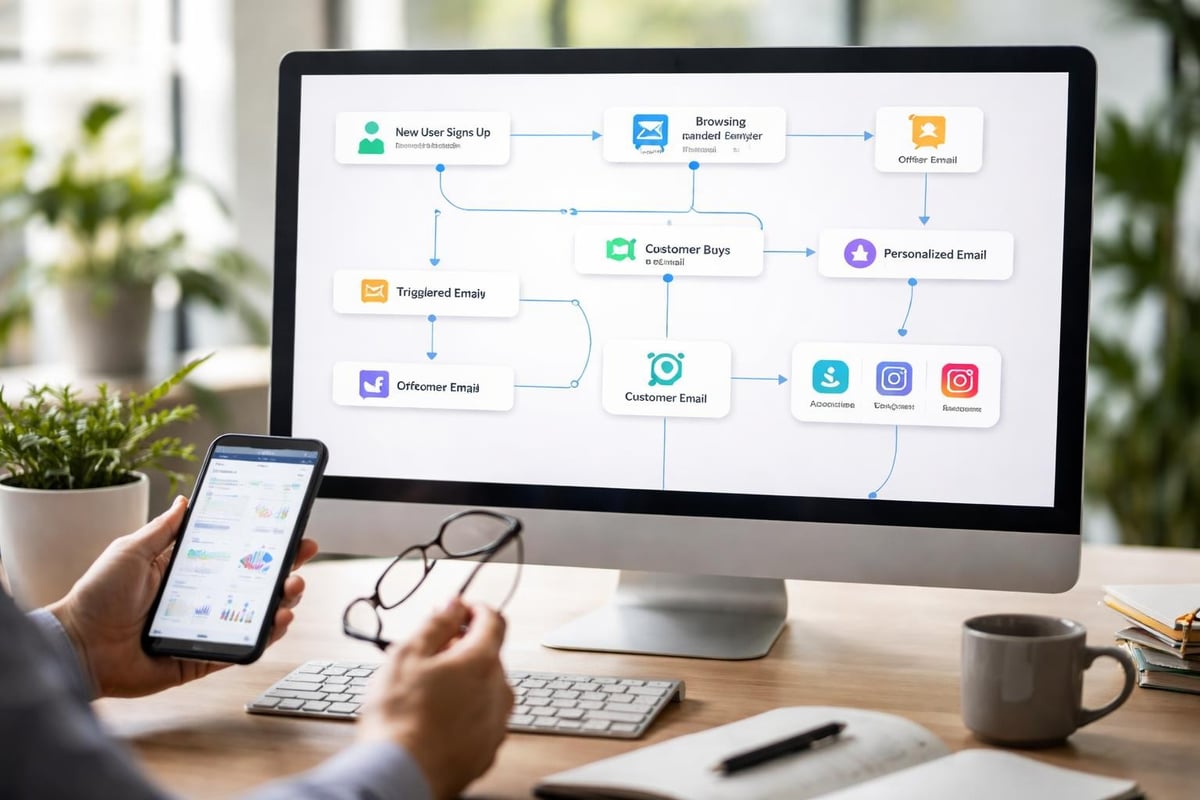
As your integration matures, advanced tactics can further enhance performance and create competitive advantages. These strategies require more sophisticated tools and deeper analytics capabilities but deliver proportionally stronger results.
Dynamic Content Synchronization
Leading brands now synchronize content dynamically between emails and social media based on real-time data and user behaviors. A customer browsing specific products on your website might see related content in both their inbox and social feeds, creating consistent messaging that reinforces purchase intent without feeling repetitive.
This synchronization extends to timing optimization. Advanced systems analyze when individual users engage most actively on each platform, then deliver coordinated messages at those optimal moments. One customer might receive emails on Tuesday mornings and see social ads on Thursday evenings, while another gets the reverse sequence based on their unique engagement patterns.
Social Proof Integration
Incorporating social proof from one channel into the other creates powerful validation loops. Email campaigns can feature user-generated content from social media, showcasing real customers enjoying your products or services. Conversely, social posts can highlight impressive email campaign statistics or customer testimonials originally gathered through email surveys.
This cross-pollination builds credibility and demonstrates active community engagement across multiple touchpoints. When prospects see consistent positive feedback on both emails and social media, their confidence in your brand increases significantly.
Influencer and Employee Advocacy
Strategic integration of emails and social media enables coordinated influencer campaigns and employee advocacy programs. Influencers can promote exclusive email content to their social followers, driving subscription growth while delivering value to their audience. Employee advocates can share company emails through their personal social networks, extending reach and adding authentic voices to your marketing efforts.
Working with a B2B marketing consultant can help develop these sophisticated advocacy programs, ensuring proper coordination between email campaigns and social amplification efforts. The result is expanded reach, enhanced credibility, and stronger engagement across both channels.
Platform-Specific Integration Strategies
Different social platforms require unique integration approaches when coordinating with email marketing. While fundamental principles remain consistent, tactical execution varies significantly across networks.
LinkedIn and Professional Email Campaigns
LinkedIn's professional environment aligns naturally with business-focused email campaigns. Integration strategies might include promoting LinkedIn Live events through email invitations, sharing industry insights from LinkedIn posts in newsletter content, or using LinkedIn ads to retarget email subscribers who haven't engaged recently.
The platform's robust targeting capabilities enable precise coordination with email segments. You can create LinkedIn audiences matching your most engaged email subscribers, then deliver complementary social messages that reinforce email campaign themes.
Instagram and Visual Email Content
Instagram's visual nature influences email design strategies. Successful integration often involves repurposing Instagram content for email newsletters, creating Instagram Stories that preview upcoming email campaigns, or using Instagram Shopping features to complement email product promotions.
User-generated content from Instagram provides excellent email material, showcasing real customers and building social proof. Conversely, emails can encourage subscribers to share their experiences on Instagram using branded hashtags, creating a content generation loop that benefits both channels.
Facebook and Community Building
Facebook's community features enable deeper integration with email strategies. Building a private Facebook group for email subscribers creates an exclusive community space where engaged customers can interact directly with your brand and each other. Email campaigns can drive group membership and promote exclusive group content, while group discussions provide valuable insights for email content development.
Facebook's extensive advertising platform also enables sophisticated retargeting based on email list membership and engagement patterns. Subscribers who click specific email links can see coordinated Facebook ads that continue the conversation and guide them toward conversion.
Implementation Roadmap for Emails and Social Media Integration
Successfully integrating emails and social media requires methodical planning and phased implementation. Rushing the process typically produces suboptimal results, while a structured approach builds sustainable systems that improve over time.
Phase 1: Foundation Building (Weeks 1-4)
- Audit current email and social media practices
- Identify integration opportunities and quick wins
- Establish unified customer data management
- Define key performance indicators across channels
- Create content calendar templates accommodating both platforms
Phase 2: Initial Integration (Weeks 5-12)
- Launch coordinated campaigns testing basic integration tactics
- Implement cross-channel behavioral triggers
- Develop content repurposing workflows
- Begin comprehensive performance tracking
- Refine targeting based on early results
Phase 3: Optimization and Scaling (Weeks 13-24)
- Expand automation and personalization capabilities
- Implement advanced attribution modeling
- Scale successful tactics across additional campaigns
- Develop platform-specific optimization strategies
- Train team members on integrated best practices
Phase 4: Innovation and Advanced Tactics (Ongoing)
- Test emerging integration technologies
- Develop predictive models using cross-channel data
- Implement AI-driven personalization and optimization
- Explore new platform features and capabilities
- Continuously refine strategy based on performance insights
Working with specialists in managing social media alongside email campaigns can accelerate this timeline while avoiding common pitfalls that derail integration efforts.
Tools and Technology for Emails and Social Media Management
The right technology stack enables efficient management of integrated emails and social media campaigns. Modern platforms offer varying levels of integration capability, from basic scheduling tools to comprehensive marketing automation systems.
Essential Platform Capabilities
| Capability | Benefits | Implementation Priority |
|---|---|---|
| Unified dashboard | Monitor all channels from single interface | High |
| Cross-channel automation | Trigger actions across emails and social media | High |
| Centralized analytics | Compare performance across channels | High |
| Content library | Store and repurpose assets efficiently | Medium |
| Social listening | Identify opportunities for email follow-up | Medium |
| A/B testing | Optimize messaging across platforms | Medium |
| AI-powered insights | Predict optimal strategies automatically | Low (growing) |
Leveraging comprehensive AI automation solutions streamlines campaign management and enables sophisticated personalization at scale. These systems continuously learn from performance data, automatically adjusting strategies to maximize results across both emails and social media.
Integration Architecture
Successful integration requires platforms that communicate effectively with each other. Marketing automation systems should connect seamlessly with social media management tools, customer relationship management databases, and analytics platforms. This architecture ensures data flows freely between systems, enabling the real-time responsiveness that modern customers expect.
API connections, native integrations, and middleware solutions all play roles in creating this connected ecosystem. While technical implementation may require specialized expertise, the resulting efficiency gains and performance improvements justify the investment for businesses serious about maximizing their digital marketing effectiveness.
Mastering the integration of emails and social media positions your business for sustained growth in an increasingly competitive digital landscape. By implementing these strategies systematically and measuring results rigorously, you create marketing systems that consistently deliver value to your audience while driving measurable business outcomes. Synergy Digital Solutions specializes in helping businesses navigate exactly these challenges, offering comprehensive email campaigns, social media strategies, and AI-powered automation that work together seamlessly to amplify your digital presence and accelerate growth.